
The Silent Thread: Anne Briggs (Article and Playlist)
A deep dive into the music and influence of Anne Briggs with rare live footage, interview, and an extensive four-hour playlist featuring both her music and those she has influenced

Introduction
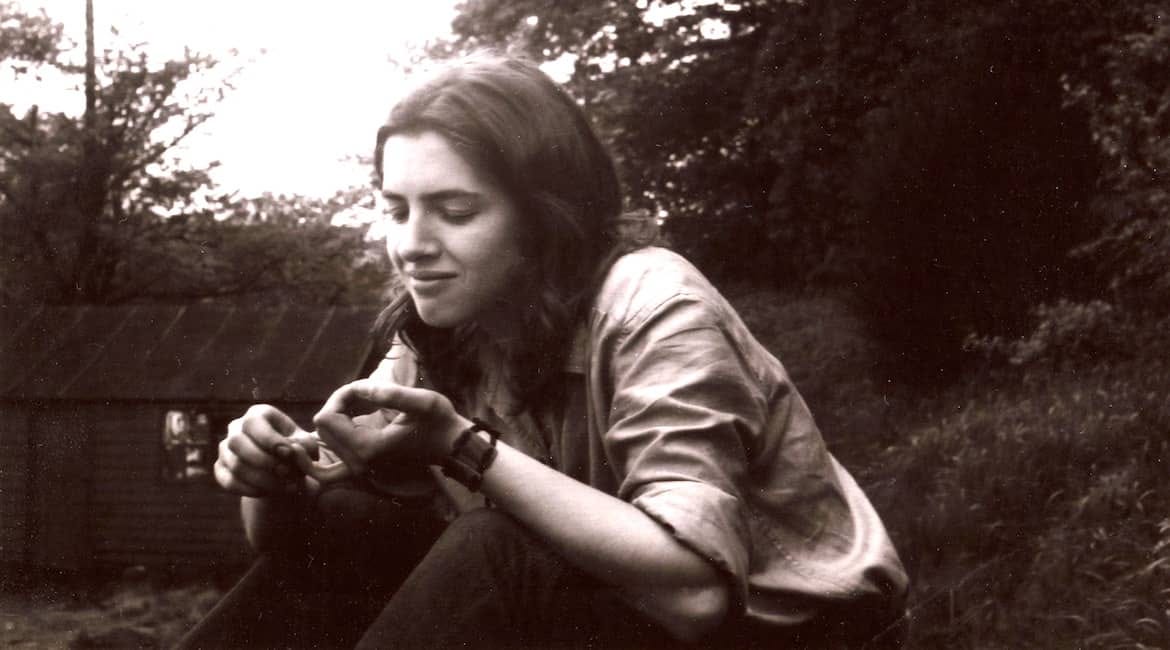
Richard Thompson famously sang of a woman “fine as a beeswing,” a lyric widely understood to be an elegy for Anne Briggs. While the song carries a tone suggesting its subject has passed into the ether, Briggs remains very much with us—though her decision to withdraw from the public eye in the early 1970s has bestowed upon her a near-mythological status.
As Colin Harper once observed, Briggs wasn’t just a singer; she was “the bridge.” She made the ancient oral traditions of the British Isles credible, sexy, and attainable for a generation of icons, including Bert Jansch, Sandy Denny, Led Zeppelin, June Tabor, Christy Moore, Richard Thompson, and Dick Gaughan.
While others like Sandy Denny or Bert Jansch became stars, Briggs’ unadorned voice and pioneering arrangements became a “silent thread” connecting the radical folk revival of the 1960s to the diverse independent music landscape of the 21st century. While she stepped away from the industry decades ago, her fingerprints are everywhere—from indie-rock concept albums of the US to the vanguard of modern British folk.
We invite you to rediscover an artist who was as earthy as she was ethereal and enjoy a playlist (along with notes) that explores her music and influences, as well as the impact she has had on others.
Four Songs (2016)
I had the pleasure of meeting Anne a few years ago. We had common ground in our love of nature, and I’d not long finished a conservation degree. From an early age, her life revolved around nature, and she still has an immense passion for it. We hardly spoke about music that evening. In an interview with Colin Harper, she once shared:
“I love the concept of the edge of the land, and the beginning of the unknown. It’s like a mystical thing.”
We spoke again, this time about the release of the 2016 EP ‘Four Songs’ (Fledgling Records). It would be the first time these early recordings had appeared on record.
Three of the songs (The Recruited Collier, My Bonny Boy, Polly Vaughan) were recorded in 1966 by Peter Kennedy for the BBC’s Folk-Song Cellar. The same year that Sandy Denny appeared on the programme. Anne was a profound influence on Sandy Denny, and Denny showed her admiration by covering Briggs’s songs and writing a tribute song, “The Pond and The Stream.”
This BBC series was presented as an informal get-together in a fictional folk club (which was actually the basement studio of Cecil Sharp House) and hosted by Scottish duo Robin Hall and Jimmie MacGregor. The final track, The Verdant Braes of Skreen (listen below), was recorded live in 1965 by three close friends of Anne’s: Gren Blatherwick, Spike Woods and Al Atkinson. It was recorded at their local folk club, The Nottingham Co-op Workshop.
Anne was billed as “from Nottinghamshire comes Anne Briggs to sing some of those unaccompanied songs she heard first from the gypsies”. She lived a nomadic existence, she recalls, “In 1966 I was living in three different places, one was various locations in Ireland, another was Gill Cooks flat in London, and thirdly on various floors in and around Nottingham.”
In 2006, Gill Cook passed away; a read through her obituary in The Guardian reveals she was something of an unheralded figure who helped put world music on the commercial map. She managed Collet’s at 70 New Oxford Street, London, a place I often frequented in the 80s, the record store offered music from the likes of the Copper Family to the Nubian oud of Hamza El Din. Anne and Bert Jansch apparently wrote some of their songs in her flat.
Beginnings: Nottingham to Centre 42
Born in Toton, Nottinghamshire, in 1944, Anne Briggs was a “feral” child by her own description. Raised by an aunt after the early death of her parents, she was expected to lead a conventional life as a nurse or hairdresser. Instead, she fell in love with the raw, untainted sounds of traditional field recordings.
Her breakthrough came in 1962 through Centre 42, a socialist pressure group led by playwright Arnold Wesker. The group aimed to bring high art to the working class. At an audition in Nottingham, folk legend Ewan MacColl heard the seventeen-year-old Briggs sing. He was so struck by her talent that he convinced her to “run away with the circus.” Briggs left home just weeks before her eighteenth birthday, joining a touring troupe that included MacColl and A.L. “Bert” Lloyd, who would become her most significant mentor.
Anne recalls, “Centre 42 exposed me to singers I hadn’t heard before, either because they hadn’t recorded, or because I didn’t have access to their material.
When I was singing, I always wanted to ‘disappear’, so the audience could hear the song better and not have to look at me. I almost felt I’d achieved this on some occasions.”
“I was aware of some of the work being done by Ewan McColl, Peggy Seeger and Bert Lloyd, mostly via radio programmes, and particularly the Radio Ballads, and I had previously met Ray Fisher on an earlier visit to Scotland. New faces and voices for me were Bob Davenport, Louis Killen and Johnny Handle, all originally from the N.E., Cyril Tawney from the South of England, the McPeake family from Northern Ireland, the Stewart family from Scotland, etc. Exposure to this wide variety of folk music, rich in regional and cultural differences put me on a steep learning curve, as it helped me to learn how to listen, which probably had a huge influence on my own style of singing, though I was totally unconscious of it at the time, I was unaware of having any style at all! I just wanted to sing in a way so people could hear the song and get the meaning. When I was singing, I always wanted to ‘disappear’, so the audience could hear the song better and not have to look at me. I almost felt I’d achieved this on some occasions.”
The folk clubs of the sixties were a musical circus, conduits for change:
“The folk clubs were good in that they provided a platform for all sorts of music, and other related entertainments, and they were relatively affordable for young audiences, and they were cosmopolitan. One could hear blues, jazz, country, traditional, European, American, folk, rock and pop. Also, dancers, cloggers, rappers, raconteurs, puppeteers. It was a musical circus time.
“I think Centre 42’s musical contribution to all this was to show ‘The Sticks’ what a wealth of folk musicians were available, and it made audiences aware in places like Nottingham, Bristol, Birmingham, Manchester etc. that there were a lot of people with similar interests in their area, and enough of them to be able to support new folk clubs, put on concerts, set up tours etc. It seemed that in no time at all every small town had at least one folk club, and in the cities, there were several. Most folk clubs were musically inclusive, as were most audiences. There were the odd exceptions, often politically driven, but usually they didn’t survive very long. Anyway, musical fusion was inevitable with all these different things happening on the same night on the same platform. The resulting sounds were on occasion quite magical, and some groupings still survive to this day. Sometimes the results were ‘questionable’, but, hey, everyone was having a good time singing, playing, dancing, or just listening and dreaming.”
The Irish Odyssey and the Bouzouki
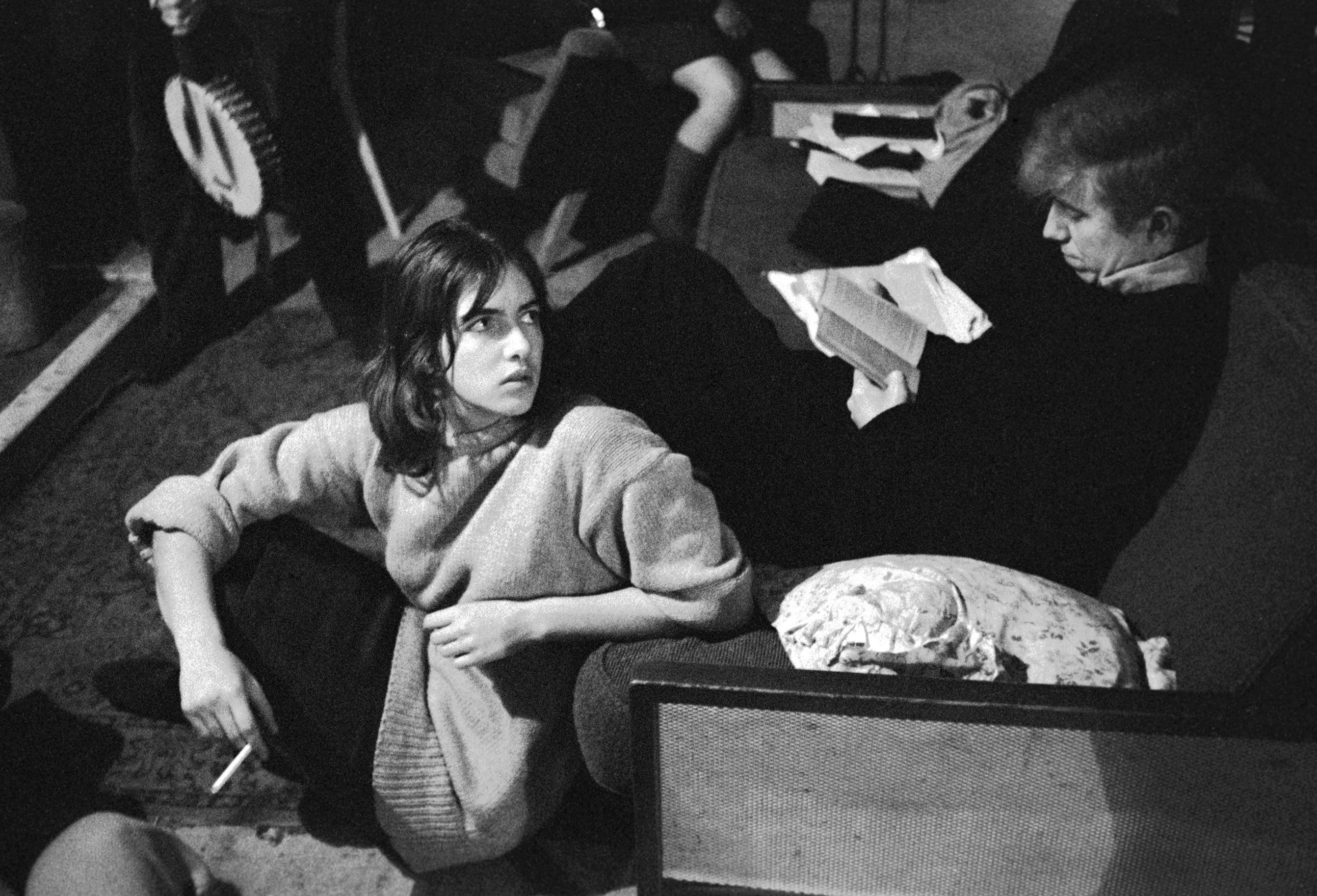
In the mid-sixties, Briggs found a spiritual home in Ireland. Travelling in a beat-up VW van or by horse and cart with her then partner, Johnny Moynihan of Sweeney’s Men, she lived a life that merged the ancient gypsy lifestyle with the modern beatnik spirit.
It was during this time that Moynihan introduced her to the bouzouki. Briggs pioneered the use of the Greek instrument in British folk, employing its ringing, modal tones to write her most evocative original songs, such as ‘Living By The Water‘.
Travelling community
“I never intended to be a song collector, as I personally didn’t own the machinery to do it, plus a reluctance on my part to impose myself into many a magical occasion which I instinctively felt would be diminished if not destroyed by the mechanics of machinery. It seemed more important for me to ‘live the moment’ as it was offered, and to absorb and remember what I could.
“I travelled and busked with Irish Travelling people on several occasions over the years. With Mick and Christy Dunne (brothers) in Cork City (we had a pitch outside the Bank of Ireland), Pecker Dunne in Co. Kerry and various towns and villages in the middle of Ireland. Others I sang with and listened to in Dublin, there was a big Travellers camp on the outskirts of the city where there were weekly sessions, and they were really good. There was a stunning singer called John Riley who had a wonderful repertoire of Big ballads, complete versions, and he had an ancient style of singing that had been untouched by the popular and Americanised styles that affected many a good singer.”
“I knew and was often in the company of Ted Furey, another traveller with a good repertoire, and his two sons, Finbar (Irish pipes), and Eddie, who sang, and who had learned to play the guitar, which was really unusual for travellers of that era. There was also another piper called Felix Doran who was occasionally around in Dublin, but I believe he was largely based in England at this time.”
“In the early sixties, I had been in the company of Margaret Barry on several occasions, another Traveller who was then based in London, living with Michael Gorman, the fiddler. Margaret had a mighty voice and the personality to go with it, and when in top form could make the hairs stand up on the back of your neck.”
Whilst Anne had spent considerable time in Ireland, she also spent time with the most famous of Scottish traveller families, the Stewarts.
“In ’62 and’63 I had met and worked with several Scottish travellers who were singers or musicians, the Stewart family from Blairgowrie, also Jeannie Robertson, Sheila Stewart and Lizzie Higgins. The women were all singers of exceptional quality, and the menfolk were musicians.
“In the late ’60’s I met up with the Smith family, and the mother was called Phoebe, and she was a splendid singer too. They were English Travellers, and by that I mean they spoke English with an East Anglian dialect and had probably been based in the area for several generations, but they had ties and contacts with the Irish and Scottish Travellers. I didn’t see as much of these folks as I would have liked as I shortly left the area just as I was getting to know them.”
Influence
At the end of that Four Songs interview, I asked Anne whether she was aware of the influence she had on other singers. Humble as ever, she answered:
“I wasn’t aware of this until fairly recently. It was something of a shock, really. Hope nobody who is under this influence comes to musical grief. But I am very much moved.”
She always wanted to “disappear” when singing, so the song was centre stage. In a way, she achieved this—she stepped away from the industry to “travel in hope rather than to arrive.”
Rare Live Footage
Here’s a rare recording of her performing live.
Nearly sixty years after she first hit the Nottingham folk circuit, her voice remains a benchmark for many, the “true form” of the British folk revival.
If I were to list the many artists that Anne has inspired, this article would extend far longer than I intended, so hopefully the playlist below goes some way in covering this. However, a few names are worth mentioning:
Alasdair Roberts
Anne actually mentioned Alasdair in a letter to me, so it seems only right that he gets a mention. I’m biased as well. I love his music, and he’s appeared on KLOF Mag many times. Anne said that Alasdair had sent her a tape of his songs and, in her words, “they were something very individual and special.”
James Yorkston
James is a well-known fan of Anne Briggs, and in the playlist, you can hear three songs from his ‘Folk Songs’ album with The Big Eyes Family Players. Released in 2009, it’s one of my all-time favourite albums. All of the songs featured on the main album (there was a deluxe edition with extras) were traditional and arranged by both James Yorkston and James Green (Green also did the artwork). There was a vast array of instruments featured, and alongside Yorkston, the band featured James Green, Nancy Elizabeth, Paul Fletcher, Ellie Bond, Luke Daniels, Pip Dylan and David Wrench.
“Most of these songs were learned from recordings from the 1960s folk revival, a fair few from Anne Briggs – but that’s quite fitting, as it was her wonderful singing that originally rekindled my thoughts on traditional music, after a well-spent youth making as much noise as I could. “ – James Yorkston.
From the Liner Notes:
Hills Of Greenmoor – I first heard this being sung by Anne Briggs on her album ‘Sing a song for you’ – where her vocal line dances around a wonderful bouzouki part. It’s a Northern Irish song, I think, concerning the hunting of the hare, sung from the point of view of both the hunters and the hunted.
Martinmas Time – Another Anne Briggs one, from her Classic Anne Briggs CD, which I borrowed from the library purely because she looked so bonny on the cover. There are dozens of versions of this song, with varying lyrics and such, but Anne Briggs’ version tops all I’ve heard, for the simplicity and beauty in her voice. Aside from this version, of course. I think James Green stole the bass line he plays from the great German band Can.
Thorneymoor Woods – Another poacher’s song and another one I learned from the singing of Anne Briggs. I first recorded this for Radio 3’s Late Junction programme, with Chris Thile on mandolin. That version was like a bluegrass breakdown – this one is more, erm, sedate. I suppose I’m duty-bound to say this version’s better… There’s a great version, Thorneymoor Park, by Jasper Smith, which is worth hearing.
Daisy Rickman
Daisy, a self-taught multidisciplinary Artist and folk Musician from Mousehole, Cornwall, is relatively new to the folk scene compared to the others mentioned here, but has made a big impression in a very short space of time.
In his review of Howl (released in 2024), KLOF’s Thomas Blake described Rickman’s album as “a wonder, an ancient pastoral dream of an album full of contemporary resonances.” Seek the album out. In the meantime, here are a few live takes, inspired by Anne:
Daisy: “Singing the traditional song ‘Lowlands’ whilst droning the accordion quite badly at my studio, haha. Love singing this song and the way I sing it is very inspired by Anne Briggs. One day i shall find a harmonium.”
“Forever trying to learn one of my favourite folk songs Blackwaterside. I love Anne Briggs’ version and Bert Jansch’s too... these two musicians touch a deep place inside my soul. Have never been very good at learning pieces of music and trying to follow Jansch’s hands and understand his wizardry puzzles my brain. Find it hard to sing whilst playing in his style but got this far anyhow and hoping one day i’ll get it.”
Devra Hoff
I can’t miss Devra Hoff (previously Devin), as in 2021, she released an album with special guests, entirely dedicated to Anne’s music. In his review, Tom opens:
For a few years now, Devra Hoff has been the go-to person for experimental indie acts looking for a double bassist with enough individuality and flair to stamp his own inimitable sound on a recording session, so much so that you can forget that she is a solo performer with a clutch of excellent albums behind him. She is also a big fan of British folk icon Anne Briggs, and her latest project pays tribute to her songs and those she helped to popularise. This being hoff, it’s not so much a covers album as a series of dramatic but somehow faithful rearrangements.
The Decemberists and The Hazards of Love
Anyone who follows Colin Meloy on Substack will be aware of his fondness for Shirley Collins and Anne Briggs. In 2009, The Decemberists released The Hazards of Love, which takes its name from Briggs’ EP and is based on old motifs commonly found in traditional folk songs.
Discovering Anne Briggs & Beyond (Playlist)
The playlist is just under 4 hours long.
Listen via Spotify | Apple Music | Qobuz | Tidal
I just spent my evening reading and listening and watching videos of music that I did not know existed. And now I know and there is no going back. This music speaks to me, it speaks for me and it becomes my voice. I appreciate you sharing this work.
*Devra Hoff. She transitioned a couple years back